
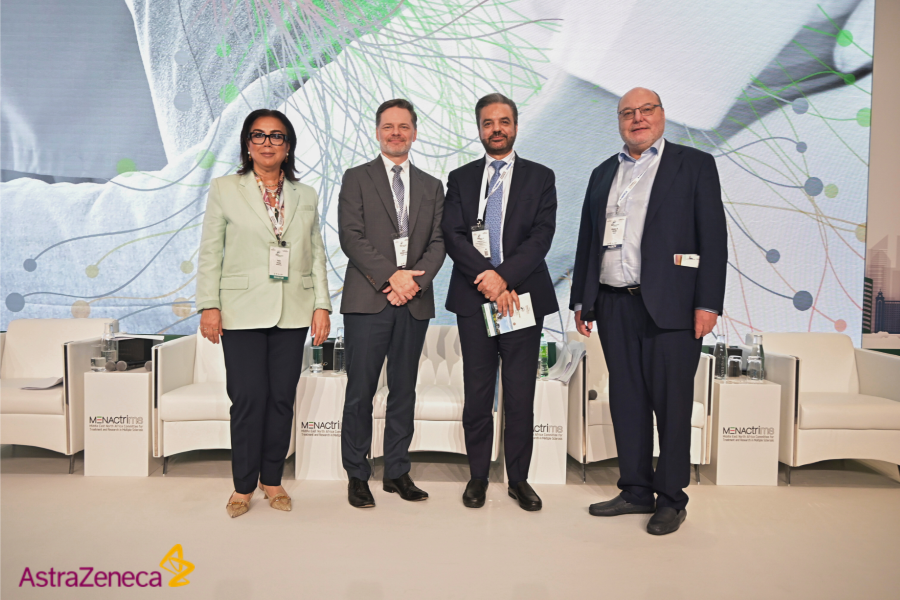
AstraZeneca today announced a strategic regional collaboration with the Middle East North Africa Committee for Treatment and Research in Multiple Sclerosis (MENACTRIMS) to implement AI-enabled brain MRI analysis to improve the diagnosis and monitoring of Neuromyelitis Optica Spectrum Disorder (NMOSD) across the Middle East and Africa.
Through the collaboration, MENACTRIMS will use icobrain, an advanced AI platform from icometrix, to analyse MRI scans from the MENACTRIMS MS and NMOSD registry. The initiative aims to support clinicians in identifying imaging patterns that are often difficult to detect through standard visual interpretation alone — a key challenge in distinguishing NMOSD from Multiple Sclerosis (MS), the most common source of misdiagnosis.
“This collaboration brings forward a practical digital solution to a longstanding diagnostic challenge.” said Pelin İncesu, Area Vice President, Middle East & Africa, AstraZeneca. “By combining MENACTRIMS’ clinical expertise with icometrix’s AI technology, we are supporting clinicians with clearer, more objective imaging insights that can help patients receive a correct diagnosis earlier. This is an important step in advancing equitable access to innovation across our region.”
NMOSD is a rare autoimmune disease that can lead to irreversible vision loss, paralysis, and long-term disability. Despite this, patients frequently face diagnostic delays of 2–4 years, and more than 40% are initially misdiagnosed. By integrating AI into MRI assessment, the collaboration seeks to shorten this diagnostic journey and improve access to timely, appropriate treatment.
Commenting on the announcement, Professor Bassem Yamout, President of MENACTRIMS, said:
“Misdiagnosis and diagnostic delay continue to affect outcomes for many NMOSD patients. Integrating AI into MRI assessment allows us to enhance accuracy, reduce uncertainty, and generate new insights using our regional registry data. We are pleased to collaborate with AstraZeneca in bringing this technology to clinical practice.”
The impact of NMOSD is severe and progressive. Within five to six years of diagnosis one-third of untreated patients experience permanent motor disability, and a quarter require wheelchair assistance. 41 percent of patients are expected to be legally blind in at least one eye, with nearly one in ten legally blind in both eyes.
Wim Van Hecke, CEO of icometrix, added: “Behind every delayed NMOSD diagnosis is a person whose life has been disrupted by uncertainty. For too many individuals, reaching the right diagnosis takes far longer than it should. Despite its severity, NMOSD still lacks the visibility and diagnostic tools it deserves. By collaborating with AstraZeneca and MENACTRIMS, we have a unique opportunity to change that. Together, we will investigate how advanced imaging analysis can accelerate the time to diagnosis and ultimately improve outcomes for people living with NMOSD across the Middle East and Africa.”
The icobrain imaging AI software has been shown to improve clinical, technical, and care workflows and to increase the detection of disease activity in MS. Researchers in this project hypothesize that it can help reduce the time to diagnosis in NMOSD by improving differentiation from MS and other mimicking conditions – helping to ensure patients receive the right treatment from the outset.
There is currently no cure for NMOSD, making early and accurate diagnosis critical to managing symptoms and preventing long-term disability. This collaboration represents a significant step forward in addressing the diagnostic challenges that have long plagued patients across the region.
A Region-Wide Initiative
The first phase of the collaboration will be implemented across 16 sites in the UAE, Saudi Arabia, Kuwait, Oman, Tunisia, Lebanon and Egypt. The project will include a retrospective analysis of approximately 300 patients from the MENACTRIMS registry, generating new real-world insights into NMOSD imaging patterns within the region.
Advancing Digital Health in Neurology
This initiative reflects AstraZeneca’s wider commitment to strengthening diagnostic pathways and accelerating digital health adoption across the Middle East & Africa. By supporting clinicians with technology that enhances precision and consistency, the collaboration aims to improve outcomes for patients living with rare neurological diseases.
