
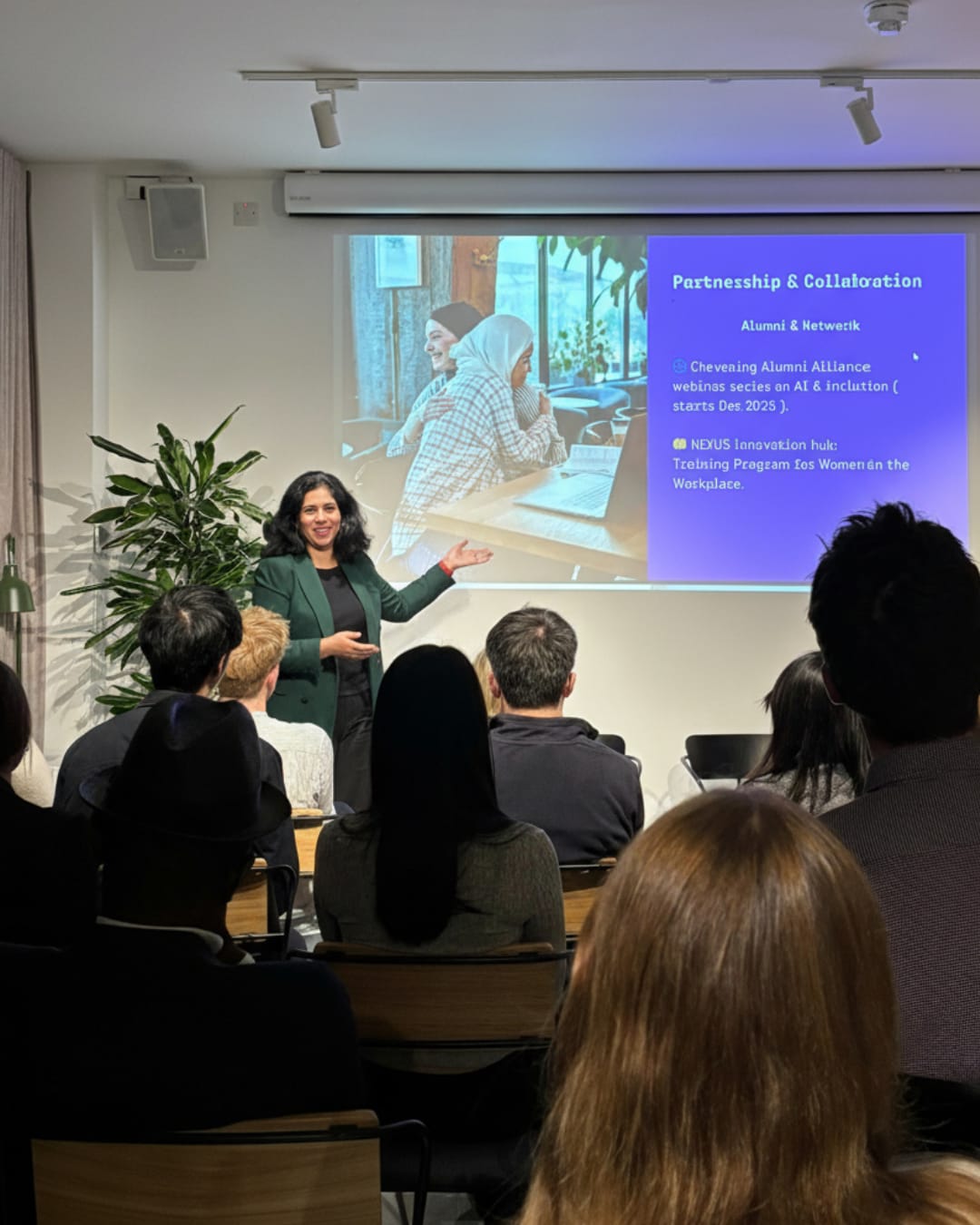
When I first pitched my venture in London, my voice trembled. Not because I doubted my idea — but because I was trying to fit a lifetime of meaning, migration, identity, and purpose into five minutes of English. In that moment, I realised something essential: a pitch is not a performance. It is an act of claiming your story.
Across the UK’s entrepreneurial landscape, storytelling has quietly become the most influential currency. A 2025 report from Barclays Eagle Labs found that 78% of successful female founders said that narrative clarity — not just business plans — was the deciding factor in securing investment. Numbers matter, but investors ultimately fund people.
For Arab and migrant women, this truth holds particular weight. We carry cultures rich with metaphor, faith, resilience, and lived experience — yet many of us have never been taught how to translate that into entrepreneurial language.
The good news? The skills are already inside us. We simply need structure, confidence, and space to speak.
Why Storytelling Works — and Why It Works for Us
Human memory is shaped by story. Research from Stanford’s Persuasion Lab shows that people remember stories 22 times more than data. A strong pitch taps into four core human needs:
- Connection — shared values and emotion
- Clarity — simple logic and structure
- Credibility — proof, experience, and integrity
- Call to action — a clear next step
Arab women have an advantage many don’t recognise: our cultures are built on oral history, vivid imagery, and heartfelt expression. With the right framework, these instincts transform into powerful business tools.
From Story to Strategy: The 4C Pitch Framework
To support founders in my work with AWWN (Arab Women Wellbeing Network), I developed the 4C Framework — a simple, adaptable structure that turns emotion into strategy without losing authenticity.
1. Core — Start with your mission.
What do you believe in? Why does this venture need to exist?
2. Challenge — Define the problem that matters.
Who is struggling? How does this affect lives, communities, or industries?
3. Change — Present your solution.
How does your product or service transform that reality? What makes it meaningful?
4. Call — Ask clearly and confidently.
What do you need — investment, partnerships, mentorship, or support?
This four-part rhythm brings your audience on a journey:
purpose → pain → possibility → partnership.
A pitch structured this way becomes unmistakably clear, even to someone hearing your idea for the first time.
Finding Your Voice in One Sentence
Before building a deck or rehearsing your lines, craft your core message using this simple formula:
“My company helps ___ do ___ through ___.”
Then add purpose:
“…in a way that respects culture and creates connection.”
If someone outside your field can summarise it in ten seconds, your pitch is ready to build on.
Begin With a Heartbeat
Your opening line is your doorway. Start with a moment that shaped your “why”:
- Personal moment:
“When I moved to London, I couldn’t find a single wellbeing group that spoke my language.” - Data that shocks:
“Only one in twenty Muslim women entrepreneurs in the UK ever secure funding.” - A quote rooted in heritage:
“My grandmother used to say, ‘Faith without work is wishful thinking.’ That belief shaped my business.”
Hooks like these are not tricks — they are bridges. They help your audience see you before they see your model.
Faith, Culture, and Confidence
Too often, Arab and migrant women believe they must sound “Western enough” to be taken seriously. In reality, authenticity is your most persuasive asset.
Values such as:
- intention (niyyah)
- integrity (sidq)
- humility (tawadu‘)
align with what all investors look for: honesty, purpose, and character.
When you speak with your accent, your heart, your cultural references, you’re not signalling difference — you’re signalling depth. Investors remember distinctiveness.
Turning Fear Into Fuel
Let’s be honest: many founders fear the stage more than the business itself.
But fear is not a weakness — it is unused energy.
Here are common barriers women face, and how to reframe them:
| Barrier | Reframe |
| Accent anxiety | Authenticity > perfection |
| Stage fright | Breathe, ground, begin with gratitude |
| Gender bias | Lead with results and clarity |
| Time pressure | Practise within the limit — structure is liberation |
| Rejection | “No” is often “not yet” |
Confidence is not a personality trait — it is trained courage.
When Technology Supports the Story
When I began pitching AWWN, I struggled to summarise the vision quickly: a digital, bilingual wellbeing and career platform supporting Arab women across the UK and Europe. It felt impossible to condense it into 180 seconds.
That’s when I began using AI as a storytelling partner. We developed a bilingual chatbot that helps women draft pitch scripts using simple prompts:
- “Help me write a 3-minute pitch.”
- “Generate a story hook for my startup.”
Combined with our “Pitch Circles,” women who once hesitated now practise weekly, learning to express complexity in simple, powerful language. AI doesn’t replace our voices — it unlocks them.
Why This Matters
Pitching is more than summarising your business. It is an act of presence. A declaration that you deserve to be in the room and that your story holds value.
When Arab and migrant women share their journeys — the sacrifices, the faith, the resilience they expand what leadership looks like. They shift ecosystems. They make space for the next woman.
A great pitch not only raises capital. It raises confidence. It raises communities. It raises futures.
Closing Reflection
Every woman carries a story worth hearing. The moment you choose to articulate it — clearly, courageously, and with structure — you turn it from a private memory into a public force.
Your accent is an asset. Your heritage is a strategy. Your story is your power. And when you tell it well, you don’t just build a business — you rewrite the possibility of what comes next.
