
Tell us about yourself and your background.
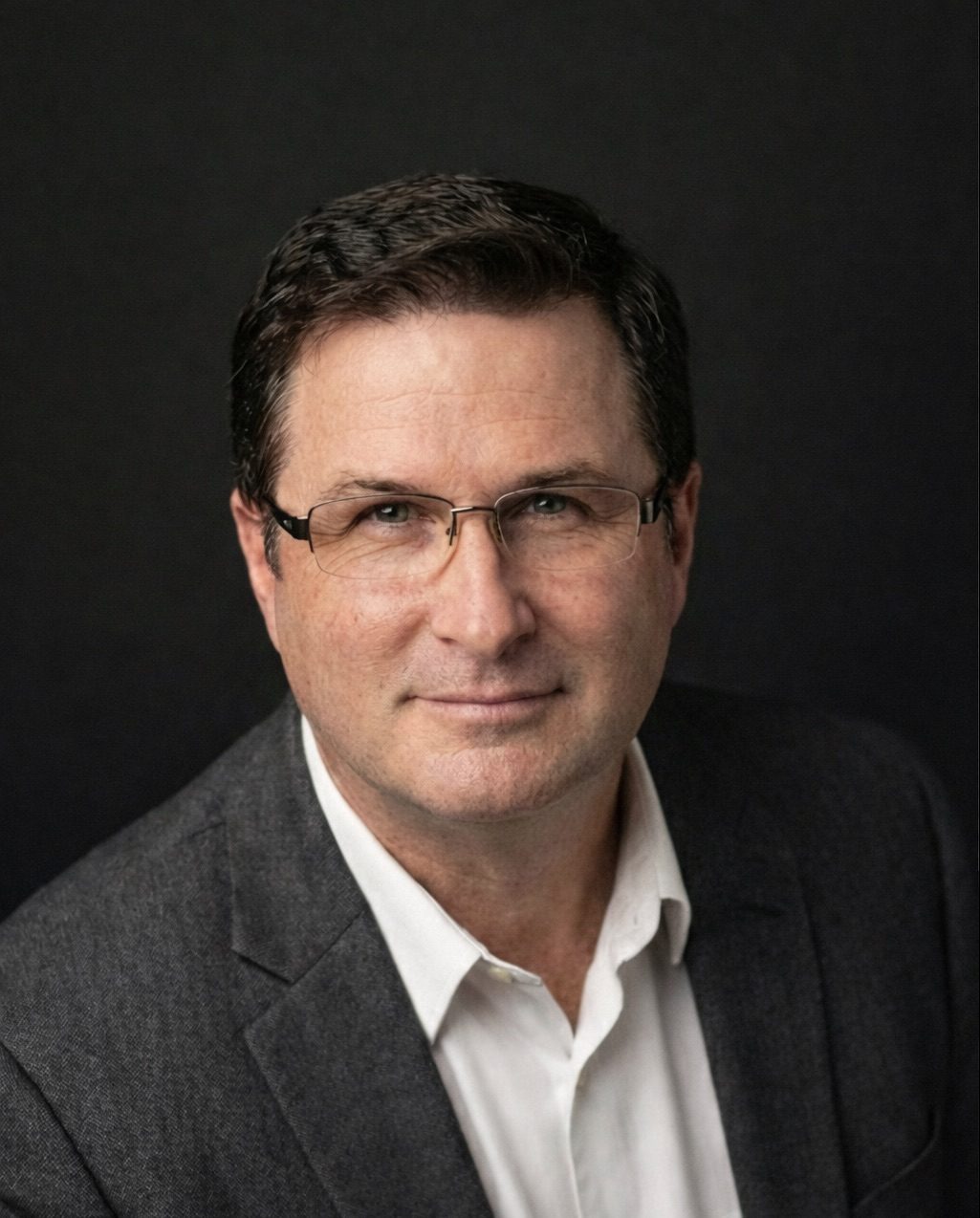
My name is Kevin George, and I am the Founder and CEO of Sanctum Secure. Our work is focused on designing private digital infrastructure for high net worth families, family offices, and organizations operating across the Middle East and globally, where trust, confidentiality, and long-term stewardship are essential.
My professional background is rooted in problem solving within complex, high-responsibility environments. I have consistently worked in situations where the stakes are high, the variables are uncertain, and the systems must hold under pressure.
In Mongolia, I led an initiative to establish a multi-million dollar cardiac monitoring center within a local hospital. This required recruiting and coordinating Rotary International, aligning international stakeholders, navigating infrastructure limitations, and ensuring that the system could operate reliably in a challenging environment. It required bridging global resources with local realities, where success depended not only on funding, but on governance, trust, and execution discipline.
In South Africa, I directed an international regional university, overseeing cross-cultural operations, institutional governance, and long-term continuity. That role required aligning leadership, managing diverse stakeholders, and ensuring the institution could operate beyond individual leadership cycles.
These experiences reinforced a principle that defines my work today: the systems that matter most are the ones that hold under pressure, not just under ideal conditions. Governance, control, and structure are not optional, they are foundational.
That perspective directly informs our work at Sanctum Secure. Secure families do not rely on platforms. They rely on architecture.
How did you get started in cybersecurity?
My entry into cybersecurity came through observation rather than specialization. I saw how sensitive information moved through organizations without clear ownership, and how systems were often designed for convenience rather than durability.
In moments of disruption, those systems revealed their fragility. This led me to a different question. Instead of asking how to defend these systems, I began asking why they were vulnerable in the first place.
That shift led me into cybersecurity through the lens of governance and structure. When control is clearly defined, when ownership is established, and when privacy is embedded into system design, many risks are reduced at their source.
Why is it important to have control over your digital assets?
For decades, the digital world has moved steadily toward centralization. Cloud platforms have delivered convenience and global accessibility, but often at the cost of control.
In the Middle East, where family offices manage assets across multiple jurisdictions and generations, control is not a preference. It is a requirement.
When sensitive information resides on external systems, it becomes subject to external policies, jurisdictions, and vulnerabilities. This creates a structural risk, particularly during high-stakes transactions, negotiations, or periods of instability.
Digital assets today represent identity, ownership, financial positioning, and institutional knowledge. Without control, these elements cannot be fully governed.
This is why digital sovereignty is becoming a central conversation across the Gulf.
What is your mission?
Our mission at Sanctum Secure is to restore control, privacy, and continuity to the digital environments of the families and organizations we serve.
We design systems that operate independently of fragile external dependencies, where governance is clear, privacy is embedded, and access remains under the client’s authority.
At its core, our mission is about stewardship. Families in the Middle East are not managing assets for the present alone. They are preserving legacy across generations.
How are you redefining the future of cybersecurity?
We are redefining cybersecurity by shifting the focus from defense to design.
Most of the industry focuses on protecting connected systems. Our approach is to design systems where the most sensitive information does not depend on connected environments at all.
This reduces exposure at a structural level and creates a more resilient, sovereign model of digital security.
Why is the Middle East at the centre of this conversation?
The Gulf region occupies a unique position in the global digital sovereignty discussion.
Family offices in the UAE and Saudi Arabia manage assets across continents. Entrepreneurs operate globally. Investment firms handle sensitive, cross-border transactions.
This creates complexity where digital vulnerability becomes a real risk.
At the same time, the region has a deep cultural foundation in stewardship, privacy, and long-term thinking. Digital sovereignty aligns naturally with these values.
What Is Digital Sovereignty — and why does it matter?
Digital sovereignty is the principle that individuals and organizations retain meaningful control over their most critical digital assets.
It ensures that sensitive information remains private, governed, and accessible regardless of external disruptions.
In a rapidly evolving digital landscape, sovereignty is becoming essential.
Tell us about your company, Sanctum Secure.
Sanctum Secure is the hardware and software behind true digital sovereignty.
It is a private digital vault that combines offline hardware with encrypted software, ensuring that sensitive information never touches the cloud.
What was the initial inspiration behind founding Sanctum Secure?
The inspiration came from recognizing that those with the most to lose were relying on fragile digital infrastructure.
Sanctum Secure was created to bridge that gap and provide a more resilient model.
How is your hardware unique?
Our hardware is air-gapped, meaning it is completely isolated from the internet and external networks.
This eliminates entire categories of cyber risk and ensures that access requires physical control.
And the software?
The software is encrypted and client-controlled. All keys remain with the client, ensuring full authority over their data.
Why does this architecture matter for HNWIs and Family Offices?
For high net worth families and family offices, this architecture protects privacy, ensures governance, and preserves legacy across generations.
It also ensures continuity during disruptions.
How is your approach to Cyber Security unique?
Our approach is governance-first, privacy-first, and resilience-driven.
We design systems that eliminate risk structurally rather than reactively.
Who do you work with?
We work with high net worth families, family offices, founders, and investors operating globally, with a strong focus on the Middle East.
As a company founded in the U.S., how do you see collaboration between the U.S. and UAE contributing to stronger global cybersecurity resilience?
This collaboration combines technological innovation with strategic vision, creating new global standards for privacy and governance.
What does the road ahead look like for digital sovereignty?
Digital sovereignty will move from optional to essential as digital dependency increases.
What is your long-term vision for Sanctum Secure?
Our vision is to establish Sanctum Secure as the global standard for private digital infrastructure, with the Middle East as a key region of leadership.
Where can readers connect with you and find out more?
Kevin@SanctumSecure.com
+1 (602) 481-3996
For high net worth families and family offices in the Middle East, Kevin’s book and white paper on digital sovereignty, privacy, and governance are available at no charge upon request.
