
Tell us about yourself and your career background.
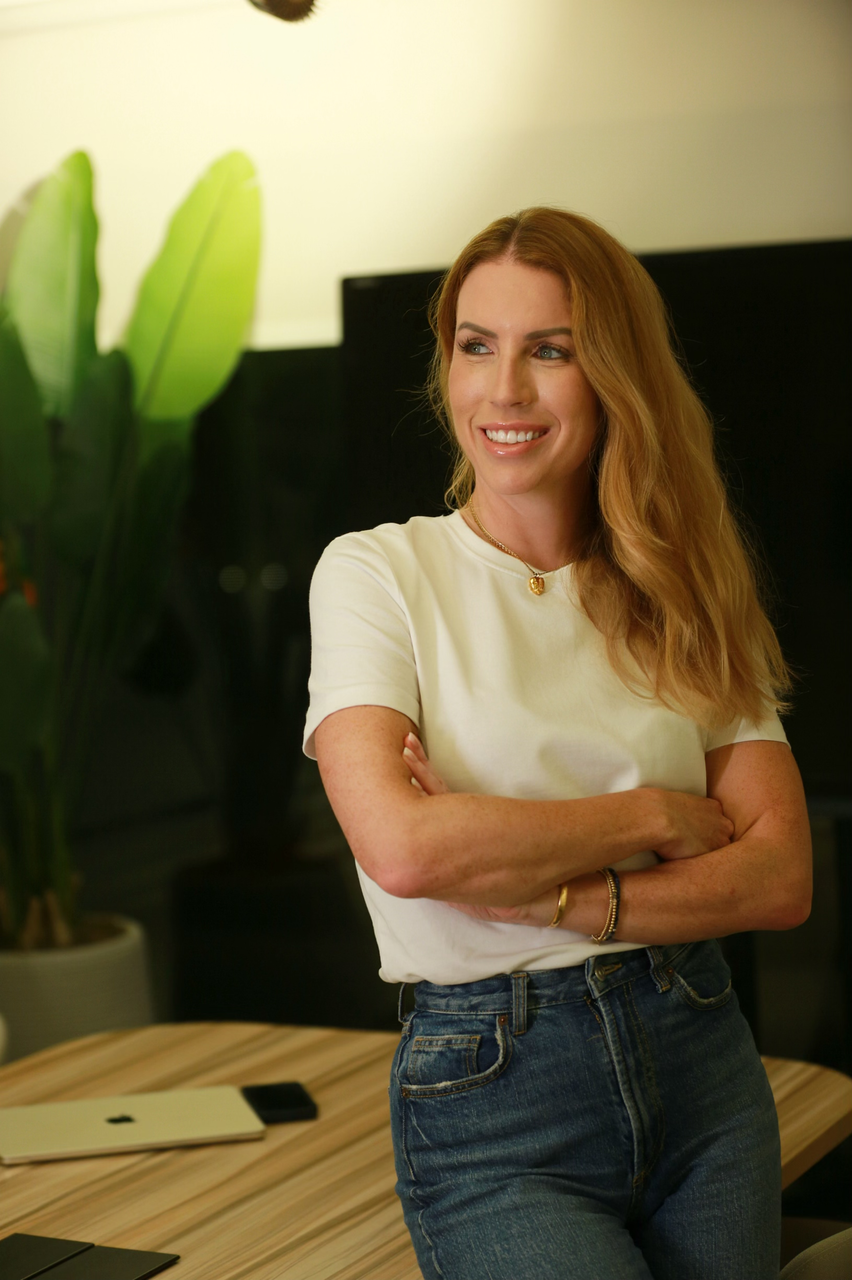
I am a passionate Real Intelligence (RI) Architect, founder, and mentor. I focus on what I call Real Intelligence (RI); the intersection where Artificial Intelligence (AI), Emotional Intelligence (EI), and Business Intelligence (BI) meet to create actual value. My work involves building strategic foundations that allow leaders to navigate continuous change and identify where technology can truly amplify operations, and where it cannot. I help businesses build internal readiness and human capability to adopt what works and ignore hype, ensuring every move creates measurable ROI.
I started at Deloitte and Accenture leading digital transformation and business process consulting projects across Europe and Asia, then moved to Dubai building an IT PMO office from the ground up and to lead multi-million dollar programs and teams of 60-plus professionals. Working across Europe, Asia, and the Middle East taught me how business gets done in different cultures and how to build real trust.
Then I took the leap into building something of my own, as I love to fix problems and identified one I deeply cared about. I founded and bootstrapped an AI tech startup, a talent acquisition platform built at the intersection of Artificial Intelligence and Emotional Intelligence. It wasn’t a smooth ride. I lost control of the company to my co-founder and had to start over. That taught me more about resilience, trust, and leading through hard times than anything I saw in a corporate setting.
Alongside this, I have been mentoring students to help them find their mission and take charge of their careers instead of waiting to be told what to do.
I founded QuAItly Unstoppable to address a recurring issue, leaders outsourcing their thinking and decision making instead of developing their own operational awareness and the right capabilities first, and leaving real money on the table as a result. Most of the businesses I work with are succeeding on paper and exhausted in practice. I lived it. I know what it costs when the wrong decisions get made, and I know what it takes to get it right
My goal is to change this pattern.
What led to your decision to leave corporate life?
The decision was partly made for me, but I saw it coming and was mentally prepared. My company had financial troubles and there were redundancies. I was one of them, even though I’d just delivered a complex greenfield development program on time and under budget.
I’d already been building the startup on the side and knew at some point I needed to take the jump. So when the door closed, I didn’t feel lost because I felt free. The jump was uncomfortable, but the direction was right. I was in control of where I was going, and sometimes the push you didn’t ask for is just the one that gets you moving toward the path you’ve already chosen.
What is the biggest challenge you have faced in your career?
Losing the startup I had founded was one of the hardest things I have been through. I built something from nothing and really believed in it. Then I lost control of it to my co-founder. Just like that, the company I had founded and poured everything into wasn’t mine anymore.
The honest answer is, the signals were there. I did not miss them because I was not paying attention. I missed them because I was reading everything through the lens of who I am. My values. My intentions. That certainty, not naivety, was exactly what drowned the signals out. We project who we are onto the world around us and assume others operate from the same place. When something does not fit that picture, we find a way to explain it away rather than see it clearly.
That was the moment I realized that AI without EI, human trust and emotional intelligence, and BI, solid business foundations, is a recipe for failure. It’s why I now focus on the “Real” in Real Intelligence. I learned that trust has to be paired with looking at the value actually being created. Do actions match words? Good foundations protect good intentions. I carry that lesson into everything I do.
How have you used resilience to overcome the challenge and turn it into an opportunity?
Resilience, for me, comes back to identity. What pulled me through was an identity built outside of the company. A clear sense of who I was and what I stood for that did not live or die with the startup. That clarity, knowing my own ground, was what let me see the situation for what it was once it was over. It allowed me to make fast decisions, focus on what I could control, and move forward instead of staying stuck in what I had lost.
We often see things for what we want them to be, not for what they are. Knowing who you are is what gives you the courage to see the difference. When your foundation is built on those internal values rather than external results, setbacks don’t define you. You just keep going.
But I will also say this: you can’t do it alone. Identity carries you, but the right people remind you what you’re capable of when things get hard. I’ve been lucky to have people in my corner, friends, mentors, a network that believed in me. We all need our fan club.
This experience gave me a perspective you can’t get any other way. I’ve now experienced all sides: consultant, internal program manager, and entrepreneur who built and lost a tech startup. In times that require constant change and feel like we are being challenged constantly, technology will not save you. If you haven’t asked the foundational question of who you are and where you are going, technology will only amplify the uncertainty and the gaps faster.
How are you rebuilding and what is your current focus?
After losing Kaleido Talent I made a deliberate choice, not to rebuild fast, but to rebuild right. I had spent years as a consultant, a program leader, a founder, watching businesses make expensive decisions because they moved before they were ready. I had done the same. So this time the foundations came first.
That is exactly what I now do for operationally heavy, mid-sized service businesses. These businesses aren’t broken, many are growing fast, but growth is starting to feel hard and unpredictable. Operationally heavy growth eats margin quietly, and the gap between revenue and actual profit gets wider every time the business grows faster than the systems running it. Before anyone touches technology, I help them understand their own skeleton, the human and business foundations that determine whether AI will actually work. I focus on providing the clarity that turns that operational noise into a strategic advantage. And from there, we build AI as an internal capability their own people can manage and grow. The Real Intelligence. Where technical execution is needed, I bring in my vetted partner network. The goal is always the same, the business wins and keeps winning.
What are your thoughts on the adoption of AI?
Most AI adoption is failing because it’s treated as a replacement for thinking, rather than an amplifier of it. The core problem is treating AI like a standalone tool you just install. AI is more like an Intelligent Spine—it doesn’t change who you are or how you think, but it provides the central nervous system that allows the whole business to move with speed and stability.
This is where Real Intelligence (RI) comes in. It’s about moving past the ‘Artificial’ and ensuring the technology is anchored in Business Intelligence (BI) and human judgment (EI). Most businesses are jumping straight to the ‘A’ without building the ‘R.’ They are trying to run before they have built a full skeleton and identified the parts that actually require additional intelligence; maybe this is what we should call it instead.
The second failure is treating AI and humans as separate. The real opportunity is in the partnership. AI doesn’t replace human capabilities; it extends them. It sees patterns at speed, freeing the human to focus on what only a person can do, apply judgment, read context, and make the calls that require a conscience. When you build for Real Intelligence, you aren’t just automating tasks; you are building a more capable, resilient business.
It all starts with three foundational questions most leaders are too busy to ask: How well do you really know your business? Where are you heading? And is it all connected? If you can’t answer those, no amount of technology will save you.
What is your mission?
My mission is to bridge the gap between artificial potential and real-world impact—for both businesses and people. I am here to build the strategic and human foundations that ensure organizations are as emotionally and strategically sound as they are technically advanced. This commitment to the ‘Real’ in Real Intelligence extends beyond business; I am passionate about how we use education to solve real problems and empower the next generation to build things that actually matter.
Even the right tech fails without the right people. Adoption is a human decision, not just a technical one. It needs trust, buy-in and willingness to evolve. Every leader and team member deserves to understand what AI means for them and be part of building something that not only works but demands greatness.
How are you changing the way people adopt AI?
By slowing people down before they speed up. Most businesses come to me already in motion. My job is to create a pause. It’s not to delay, but to make sure the next step is the right one. I believe moving with self-awareness is the secret to success in this space. You have to know your own ground before you can scale it.
The difference between success and failure is almost never the tech. It’s whether the business was ready, if the right questions were asked and the right people were involved. I work with leaders who want to get this right, not just get it done.
This involves a mindset shift: from viewing AI as a tool to understanding it as a capability, and from fear to curiosity. When people embrace AI with genuine interest, the conversation and everything else changes.
Do you have an example you can share?
A mid-sized building services company provides a perfect example of the ‘Growth Trap.’ They used to have a dispatcher manually building a whiteboard schedule at 5:30 AM every morning for dozens of jobs, only for it to fall apart by noon. This constant reshuffling created a massive operational bottleneck in their daily business.
By rolling out an AI-powered dispatching tool that takes technician skills, certifications, availability, and job requirements, the schedule now auto-builds and updates in real-time. The results were immediate: a 30-40% reduction in drive time and the ability to handle emergency reshuffling automatically. What used to be an ‘enterprise-only’ capability is now available at a fraction of a full-time dispatcher’s cost, turning operational noise into a strategic advantage.
What is next for you?
Right now, I’m focused on finding the right leaders, the ones who are ready to stop trying to overwrite operational gaps with new technology and start facing the hard questions first. I want to be the bridge that moves them out of the daily noise and chaos and into a place where they actually have the clarity and capability to grow. The leaders I work with are tired of being promised transformation and handed a tool. They want clarity.
Looking into the future, I want to change how we adopt AI in this region, making sure it’s built on Real Intelligence rather than just hype. I’m also putting a lot of heart into education. If we can teach the next generation to think critically about AI and use it to solve real problems, we’ll raise a generation that builds things that actually matter.
Where can readers connect with you and find out more?
My website is www.quaitlyunstoppable.com and I am also on LinkedIn https://www.linkedin.com/in/carolin-baumgartner-183446a2.
If something here resonated, feel free to reach out.
