
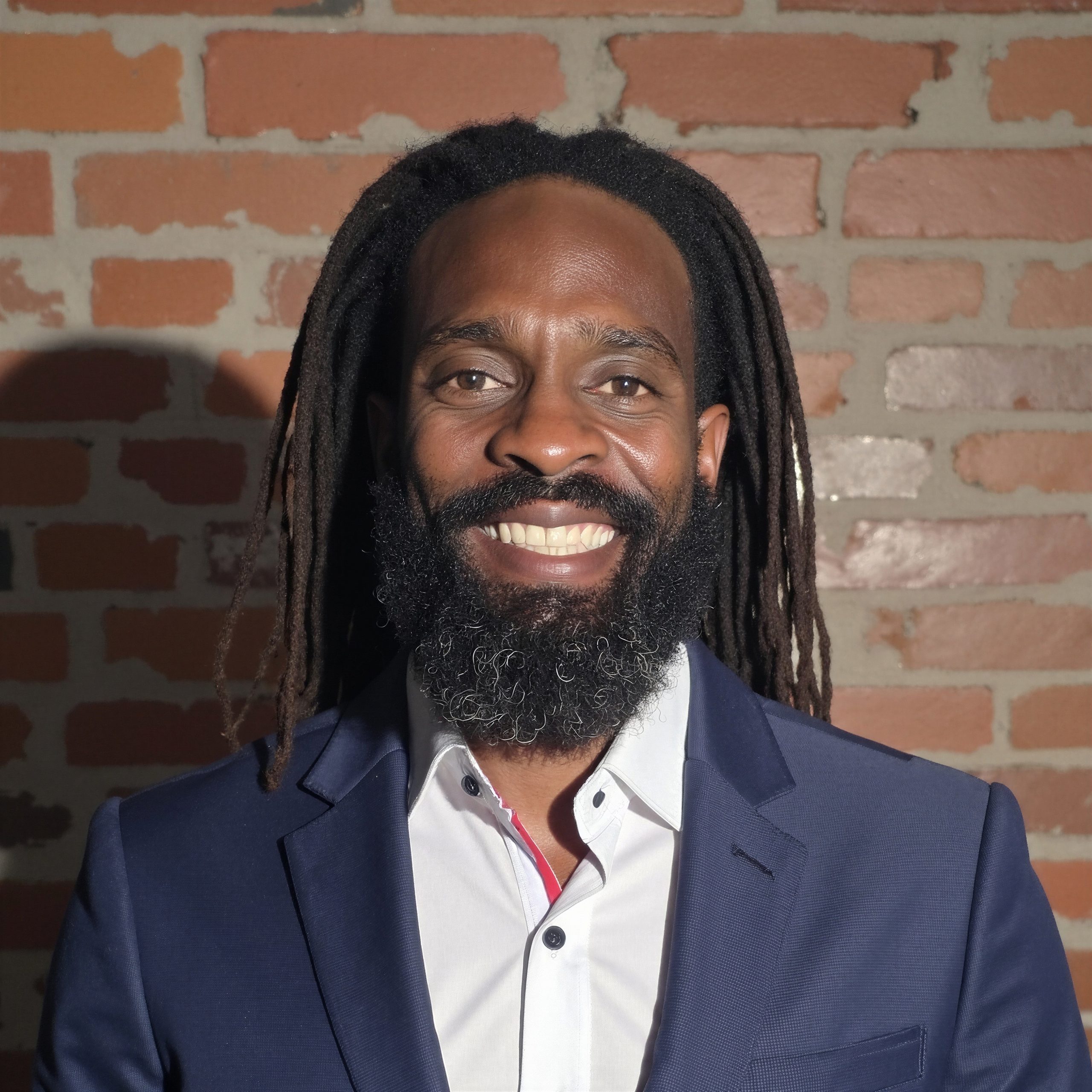
Tell us about Ultra Chain. What led you to founding it?
Ultra Chain is a compliance-first Layer 1 blockchain built specifically for institutional finance and Islamic capital markets. We are not a DeFi experiment. We are not a Layer 2 patch on top of someone else’s infrastructure. We are native, purpose-built, and production-ready, with 1.9 million lines of Rust code, 1,021 modules, 101 native applications, and a live testnet running today at rpc.ultrachainlabs.com. Anyone can verify it. The explorer is public. The infrastructure is real.
I built the entire technical foundation independently. That is not a detail I share for ego. It matters because every architectural decision reflects a single coherent thesis: that the reason institutions have not adopted blockchain is not because they lack interest or resources. It is because no blockchain has ever been built to speak their language from the ground up. Every major protocol that exists was built for a different problem, then retrofitted toward institutional use. That retrofit approach has a ceiling, and every major bank that has quietly shelved its blockchain pilot has hit that ceiling.
The founding moment came from watching the same cycle repeat. A major bank announces a blockchain pilot. Two years later, nothing. A government explores tokenised bonds. Three years later, a white paper and no issuance. Because they were trying to force institutional workflows onto infrastructure designed for anonymous peer-to-peer value transfer. Compliance was an afterthought. Regulatory reporting was an afterthought. Sharia adherence was completely absent. I decided to stop waiting for someone else to solve it.
What is your mission? What drives you?
The tagline for Ultra Chain is Truth. Trust. Unity. Forever. That is not marketing language. It is a precise description of what global finance is missing and what we are engineered to provide at the protocol layer.
Truth means transparent, auditable, tamper-proof records. In a world where correspondent banking fraud and opaque securitisation structures have caused repeated systemic crises, cryptographically verifiable truth is the baseline requirement for a financial system that works.
Trust means that institutions, regulators, and Sharia scholars can place reliance on the infrastructure without building verification layers on top of it. Trust is earned through compliance passports, native ISO 20022 messaging, quantum-resistant cryptography, and governance structures that give appropriate parties real authority within the system.
Unity means that the Islamic finance market, the conventional institutional market, the sovereign wealth sector, and the retail investor do not need separate infrastructure. One platform, unified rails, every participant operating within a framework that respects their regulatory and ethical requirements simultaneously.
Forever means permanence. Every record written to Ultra Chain is immutable, quantum-resistant, and designed to remain verifiable decades from now. Financial institutions operate on generational timescales. Sovereign wealth is managed across centuries. The infrastructure they build on must be built to last. Quantum-resistant cryptography is not a feature we added in anticipation of a future threat. It is the foundation we built on because forever is not a marketing word. It is an engineering commitment.
What drives me personally is the size of the gap between what exists and what the world needs. There is over four trillion dollars in Islamic finance assets under management globally, a market growing at double digits annually, and not a single blockchain infrastructure natively serving it. That gap is both a commercial opportunity and an obligation to solve.
Why is existing blockchain infrastructure failing institutions and Islamic finance?
Three fundamental reasons: architecture, compliance, and trust.
On architecture, public blockchains were designed for permissionless, pseudonymous transactions. Institutions require permissioned environments with verified counterparty identity, the ability to freeze assets under regulatory mandate, auditability without exposing proprietary data to the entire network, and recovery mechanisms when private keys are lost. Every one of these requirements is structurally incompatible with a system designed to resist centralised control.
On compliance, ISO 20022 is the global messaging standard for financial transactions. Swift has mandated it. The Federal Reserve and European Central Bank operate on it. Every central bank in the GCC is moving toward it. Not one major blockchain has native ISO 20022 support at the protocol layer. Ultra Chain does. We also have native quantum-resistant cryptography using CRYSTALS-Dilithium and Kyber, NIST-standardised post-quantum algorithms. Every major financial institution has a quantum migration timeline. We are already there.
On Sharia compliance, every existing solution is a wrapper on top of infrastructure that has no concept of Islamic finance principles. A Sharia-compliant fund using Ethereum is still settling on infrastructure that cannot distinguish between a Riba-bearing transaction and a Murabaha arrangement. We have embedded AAOIFI Sharia standards at the protocol layer so that structurally non-compliant transactions cannot be constructed in the first place. That is a categorically different level of integrity.
How is the current stablecoin market structurally broken?
The stablecoin market has a transparency problem, a backing problem, and a Sharia eligibility problem, and most projects have addressed none of the three.
Many stablecoins have historically published attestations rather than audits. An attestation confirms a balance at a point in time. It says nothing about the quality or risk profile of the underlying assets. Cash and commercial paper backing carry counterparty risk that correlates with redemption pressure precisely during stress events. Algorithmic stablecoins had no real backing at all. The events of 2022 demonstrated the consequences at scale.
A stablecoin backed by interest-bearing instruments is structurally unusable for the Islamic finance market regardless of how the wrapper is structured. The Riba exposure is in the collateral, and no Sharia Supervisory Board can certify an instrument whose reserve layer generates returns through prohibited means.
Ultra Chain addresses this across two distinct products. UUSD is our institutional-grade stablecoin, 200% overcollateralised using US Treasury Bills as the Layer 1 reserve and 70% physical gold plus 30% physical silver as the Layer 2 reserve. No cash, no bonds, no algorithmic mechanisms.
UUSDi is our Islamic variant. Instead of Treasury Bills, the Layer 1 reserve is sovereign Sukuk — GCC issuances, Malaysian sovereign Sukuk, and other investment-grade Islamic instruments with the liquidity profile required to function as reserve collateral. The Layer 2 backing mirrors UUSD with physical gold and silver. The result is a dollar-pegged stablecoin whose entire reserve structure is free of Riba exposure at every layer, certified by our Sharia Supervisory Board without qualification or carve-out. No stablecoin issuer in the world currently offers a Sukuk-backed dollar peg. UUSDi is a genuinely new instrument.
Beyond both stablecoins, UGOLD and USILVER function as productive tokenised precious metals generating yield through Sharia-compliant mechanisms. The full product suite — UUSD, UUSDi, UGOLD, and USILVER — creates an ecosystem of asset-backed instruments serving both conventional institutional and Islamic capital market participants from a single infrastructure layer.
How has Islamic investing evolved, and what has prompted the rise in demand?
Islamic finance has transformed from a niche regional product into a globally recognised asset class. Thirty years ago the market was largely confined to GCC commercial banking. Today it encompasses sovereign Sukuk issuances from the United Kingdom and Hong Kong, Islamic tranches within major infrastructure financing packages, and Sharia-compliant ETFs on Western exchanges. The global Islamic finance industry is approaching four trillion dollars in total assets.
Demographic momentum is the base layer. The global Muslim population is growing faster than average and skewing younger, creating decades of rising demand as wealth accumulates across generations from Indonesia to Nigeria to the United Kingdom.
GCC Vision-era transformation is the second driver. Saudi Vision 2030, UAE economic diversification, and Qatar’s infrastructure agenda are generating enormous sovereign capital seeking deployment through compliant instruments. The third driver is non-Muslim institutional adoption. European pension funds and Asian sovereign wealth funds have allocated to Sukuk not for religious reasons but structural ones — the asset-backing requirements and prohibition on excessive leverage produce risk profiles that are analytically attractive on their own terms.
What makes Islamic investing more ethical?
The prohibition on Riba eliminates the compounding debt spiral at the root of most financial crises. The prohibition on Gharar eliminates the speculative opacity that characterised the instruments central to the 2008 collapse — synthetic CDOs, opaque securitisation structures, interest-on-interest debt pyramids. All impermissible under Sharia. All catastrophic in practice.
The asset-backing requirement means every Sharia-compliant instrument must correspond to something real. A Sukuk is not a bond. It is a proportional ownership interest in an identifiable asset generating identifiable cash flows. That is also precisely why sovereign Sukuk make ideal reserve collateral for UUSDi. They are not debt instruments generating interest. They are ownership stakes in sovereign assets generating compliant returns. The reserve layer and the product principles are perfectly aligned.
Zakat adds a structural redistribution mechanism ensuring capital circulation reaches beyond the institutions that generate it. These are not religious constraints with ethical side effects. They are a coherent system of risk management that any serious financial theorist would recognise as superior design.
How does Ultra Chain fit into the future of Islamic finance?
The current Islamic finance industry operates on conventional rails. Every Sukuk clears through Swift. Every cross-border Islamic trade finance transaction touches correspondent banking. The Sharia compliance exists in the documentation while the settlement layer remains entirely conventional.
Ultra Chain changes the rails themselves. For the first time, a sovereign entity can issue Sukuk on infrastructure where Sharia compliance is enforced at the protocol layer. Smart contracts that would construct non-compliant transactions cannot be deployed. The Sharia Supervisory Board exercises veto authority within the protocol governance structure directly. Settlement is immediate, transparent, and cryptographically auditable. Regulatory reporting is native and automatic.
UUSDi adds a further dimension. When sovereign Sukuk simultaneously function as reserve collateral for a Sharia-native stablecoin, the Islamic capital market creates a self-reinforcing liquidity loop. Sovereigns issue Sukuk on Ultra Chain. Those Sukuk back UUSDi. UUSDi is used as settlement currency for subsequent transactions on the same platform. An Islamic financial ecosystem internally coherent at every layer — from issuance through settlement through reserve management — with no conventional financial instrument required at any point.
We are not building a blockchain that Islamic finance can use. We are building the financial infrastructure that Islamic capital markets will run on for the next fifty years.
What is your roadmap for growth?
The near-term roadmap is structured around three binary milestones.
First, seating the Sharia Supervisory Board. This is the foundational governance milestone that opens every subsequent door with Islamic capital market participants. SSB certification of UUSDi’s Sukuk reserve structure is a prerequisite for the product’s commercial deployment.
Second, ADGM FSRA licensing in Abu Dhabi. The Abu Dhabi Global Market is the premier regulatory jurisdiction for digital assets in the GCC. An FSRA licence positions Ultra Chain for direct engagement with Gulf sovereign wealth and Islamic development bank mandates.
Third, the first sovereign Sukuk letter of intent. That first LOI transforms the commercial narrative from capability to traction and simultaneously deepens the Sukuk liquidity pool available to back UUSDi issuance.
These three milestones unlock the Series A. That capital funds regulatory licences across additional jurisdictions including MiCA-compliant stablecoin licences in Europe, MAS-regulated infrastructure in Singapore, and GCC entity establishment. The first institutional hire is a Chief Islamic Markets Officer with direct origination relationships across sovereign issuers and multilateral development banks. Mainnet launches Q4 2026.
What do you see as the future of the industry? What does the Q4 2026 mainnet launch mean for the region?
The future of institutional finance is on-chain. Not because blockchain is a trend, but because the efficiency differential between programmable settlement infrastructure and legacy correspondent banking is too large to ignore indefinitely. The question is not whether this transition happens. The question is which infrastructure layer it happens on.
For the Middle East, the Q4 2026 mainnet launch is historically significant. For the first time, GCC sovereign entities, Islamic development banks, and Waqf institutions will have access to blockchain infrastructure designed for them from the beginning — with AAOIFI compliance at the protocol layer, ISO 20022 native messaging, quantum-resistant cryptography, and a Sharia Supervisory Board embedded in the governance structure.
UUSDi specifically changes the regional calculus. For the first time, Islamic financial institutions will have access to a dollar-pegged settlement currency whose entire reserve structure is Sukuk-backed, SSB-certified, and free of Riba exposure at every layer. That instrument unlocks cross-border Islamic trade finance, Waqf liquidity management, and retail Sharia-compliant payments at a scale that existing infrastructure cannot support.
The Islamic finance industry is simultaneously the GCC’s most distinctive competitive advantage and its most underleveraged technological opportunity. The combination of sovereign capital, regulatory maturity in Abu Dhabi and Riyadh, and an enormous globally dispersed Muslim investor base creates conditions for the region to define the next generation of Islamic capital market infrastructure.
Ultra Chain intends to be the infrastructure on which that future is built.
Where can readers find out more?
Visit ultrachainlabs.com. The testnet is live and the explorer is fully public. Institutional inquiries and investor outreach go directly to investors@ultra-chain.io.
