
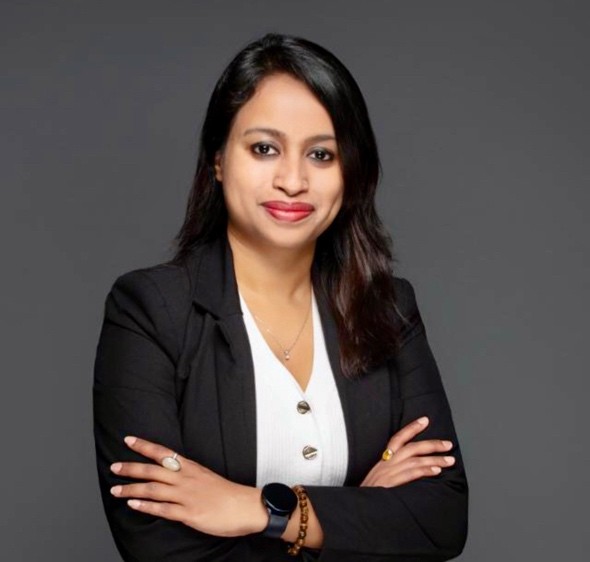
Tell us about yourself and your background.
I’m originally from Kolkata, and I started my career with Tata Teleservices in a customer-facing role. That early exposure to customers and problem-solving shaped how I think and work.
I’ve always been open to feedback and focused on improving. One question I used to ask myself was, “What I don’t have, can I build?” That mindset helped me grow quickly.
Over time, I realized I could simplify and explain things well. I would first understand it myself and then help others grasp it easily. That became a key strength and led me into Learning and Development.
What is it that you do?
I work in Learning and Development with a focus on building capability that directly impacts business performance.
My role is not just about training. It’s about understanding the real need, identifying competency gaps, and designing practical solutions that improve customer experience, sales, and team performance. If it’s not reflecting in results, it needs to be reworked.
What are you most proud of achieving in your career?
I’m proud of the journey and the scale of exposure I’ve had.
A key milestone was working with Microsoft at the age of 23, managing 66 stores, leading a team of 11, and consistently delivering top performance across the country.
Over time, I moved into core L&D with Lenskart, then to the Middle East with Landmark Group handling Qatar and Bahrain, and now in Dubai working with teams from over 50 nationalities.
More than roles, I value the impact building people, improving performance, and contributing to business outcomes.
I was also recognized as a Young L&D Champion across the GCC (6th Edition) by Empire Forums, which was a meaningful milestone in my journey.
What interesting projects are you currently involved in?
I’m currently working on a few key initiatives focused on behavioural capability.
The First 60 Seconds framework focuses on how teams connect with customers in the first interaction. It has helped improve customer experience and overall perception. It has helped improve customer experience and contributed to a strong increase in customer satisfaction and overall perception.
The RESET program works on mindset and behavior helping people become more aware of how they think, react, and respond.
I’m also driving a 30-60-90 mentor program for new joiners and building mid-management capability programs to strengthen leadership thinking and decision-making.
In your role, how do you ensure L&D is aligned with business goals?
It starts with understanding the business need clearly.
I spend time with stakeholders to identify what we are actually trying to solve whether it’s customer experience, conversion, or efficiency. Many times, the issue is not training but clarity or behavior.
Once the need is clear, I design solutions that directly address those gaps and link them to measurable outcomes.
How should impact be measured and governed?
Impact should be defined before the training begins.
I look at three levels learning, behavior, and business outcomes. Understanding is the first step, but real value comes when behavior changes and reflects in results.
This could be better customer feedback, higher conversion, improved service quality, or stronger sales performance. I also ensure regular follow-ups and reviews. If something is not working, we adjust quickly.
What is your approach to project management?
I follow a structured but practical approach inspired by Six Sigma.
It starts with defining the problem clearly, understanding the root cause, and then designing simple, relevant solutions.
I usually test through pilots, refine, and then scale. The focus is always on solving the right problem and ensuring the results are sustained.
How do you create a positive work culture and foster collaboration within your team?
For me, it comes down to three things—clarity, trust, and growth.
People perform better when expectations are clear and they feel trusted. I also focus on listening and creating an environment where people feel comfortable sharing their views.
When people see that they are learning and growing, collaboration improves naturally.
What is your leadership philosophy?
My leadership philosophy is simple-create the right environment for people to perform. If people have clarity, trust, and ownership, performance follows naturally. I focus on clarity, ownership, and building self-awareness within teams. I also believe in leading by example.
There is no one-size-fits-all approach. Leadership needs to adapt based on people and situations.
Do you have a framework for change management and driving behavioral shifts?
Yes, but I keep it simple.
I start with creating awareness—helping people understand why change is needed. Then I focus on reflection, introducing practical tools, and reinforcing consistently.
Behavioral change doesn’t happen in one session. It needs continuous support and involvement from leaders on the ground.
What are some common performance indicators that you use to assess progress?
I look at both behavior and business outcomes.
This includes customer satisfaction, first-time resolution, conversion rates, service quality, and overall sales impact.
If learning is effective, it should reflect in performance and numbers.
What makes a great company culture?
A great culture is what people experience every day.
It comes from clarity, trust, respect, and accountability. It’s also about how leaders communicate and how teams perform.
A positive culture should not just feel good-it should also drive results.
What do you see as the future of Learning & Development in the Middle East?
The future is moving towards digital, blended, and micro learning.
Learning needs to be flexible and part of daily work. At the same time, the focus on behavior and business impact will become stronger.
With diverse workforces, leaders also need to be more adaptable and culturally aware.
What are your goals for the next 5 years?
My focus is on scaling impact and moving into more strategic roles.
I want to work closely with leadership teams to drive business performance through capability building, expand across regions, and build strong internal learning ecosystems. The focus will shift from learning delivery to performance impact.
Where can readers connect and find out more about you?
Readers can connect with me on LinkedIn, where I share insights on learning, leadership, and business impact.
I’m also available at majumderdebashi@gmail.com for meaningful conversations and collaborations.
